

Thailand’s Semiconductor Boom Needs 86,000 Skilled Workers
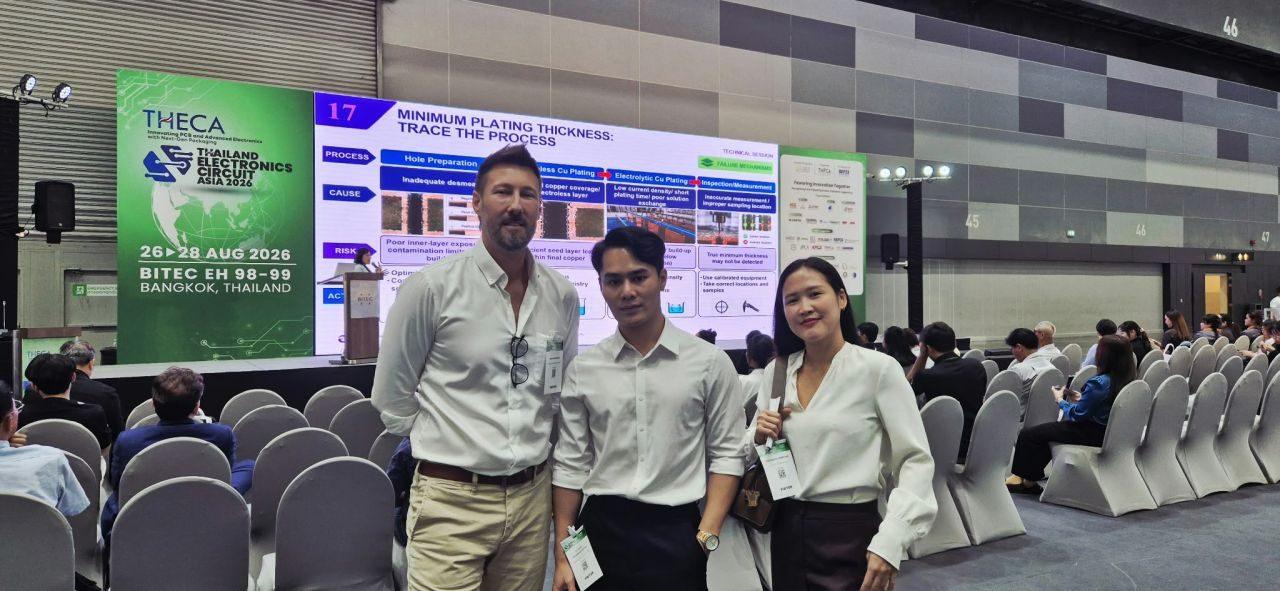
We spent Friday at Thailand Electronics Circuit Asia at BITEC, catching up with semiconductor and electronics clients and getting a look at what the industry is preparing for next.
The short version: the money has arrived, the factories are being built, and the thing most likely to slow any of it down is people.
The numbers are not small
Thailand has secured more than 1 trillion baht, around 30.5 billion US dollars, in electronics investment since 2023. Printed circuit boards and electronic components alone account for 331 billion baht across 224 projects. The Board of Investment expects a further 500 billion baht of foreign investment by 2029.
THECA itself reflected that scale. More than 300 exhibiting companies, roughly 7,000 international delegates from 40 countries, and over 60 conference sessions covering AI infrastructure, semiconductors, photonics and advanced packaging. Thailand has also been selected to host the 17th Electronic Circuits World Convention in August 2027, which rotates between the world’s leading electronics manufacturing economies. That is not a small signal.
What was actually on the floor
Trade shows can be vague. This one was not.
One of the technical sessions worked through minimum plating thickness in PCB manufacturing, tracing a defect back through hole preparation, electroless copper, electrolytic copper and inspection, and setting out the cause, the risk and the corrective action at each stage. That is the level of process detail this industry now competes on.
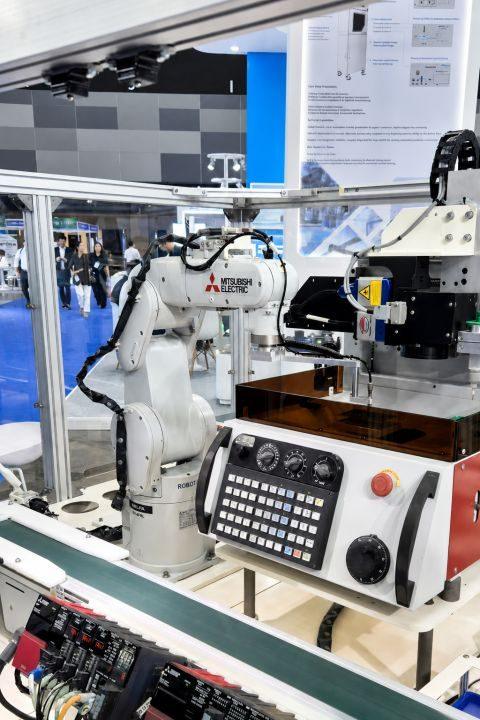
A few stands away, a Mitsubishi Electric robotic cell was running a pick and place operation alongside conventional machine controls. Elsewhere on the floor, Thailand’s first flying car sat next to a two-wheeled autonomous delivery robot.
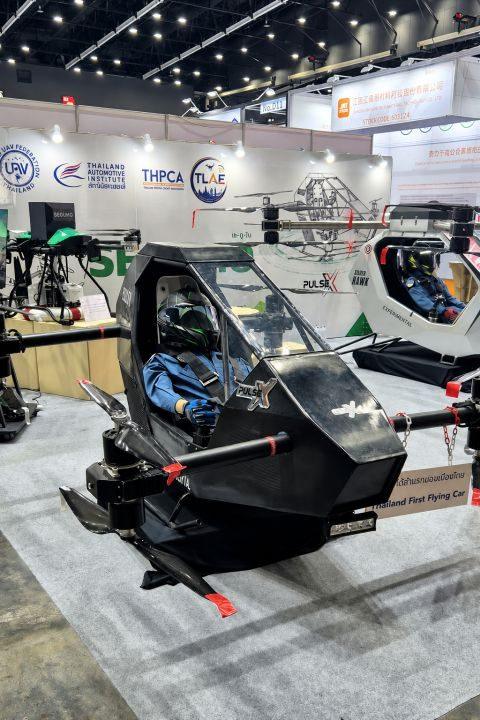
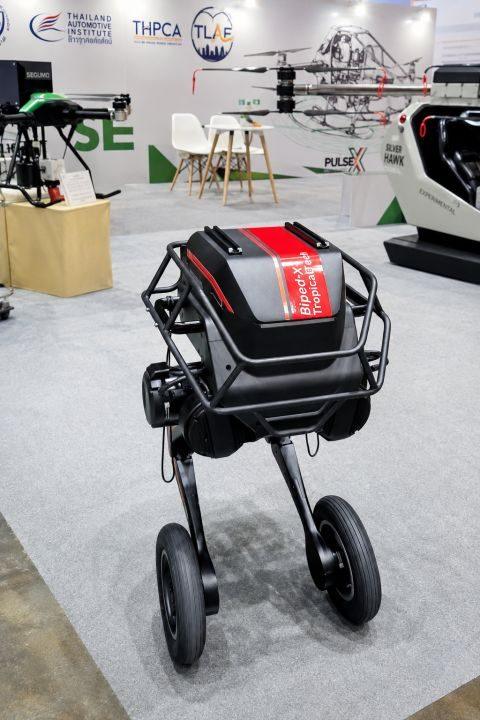
Put those four things in one hall and the theme becomes obvious. Electronics manufacturing, AI, robotics and mobility are no longer separate industries with separate supply chains. They are converging, and Thailand is positioning itself at the point where they meet.
The constraint is people, not capital
This is the part that matters if you are running a business here.
Alongside the investment strategy, Thailand’s National Semiconductor and Advanced Electronics Policy Committee has approved a workforce plan to develop more than 86,000 skilled workers, including 1,400 researchers at Master’s and PhD level.
The Board of Investment has been direct about why. As BOI Secretary General Narit Therdsteerasukdi put it, this wave of investment is different from previous decades because it is driven by frontier technologies, proprietary knowledge and highly skilled labour.
Read that as an employer and the implication is uncomfortable. The competitive advantage is no longer cheap assembly. It is specialist capability. And specialist capability takes years to build, while the fabs, packaging plants and PCB lines are being commissioned now.
A national training programme is the right answer over a ten year horizon. It does not help the plant manager who needs a process engineer this quarter.
We looked at the wider shape of this in July, in Thailand Is Already an AI Hardware Powerhouse. Now the Talent Race Begins. The figures approved since then have only sharpened it.
Where the hiring actually gets difficult
From what we see across our semiconductor and electronics clients, the pressure is concentrated in a few specific places.
Process and equipment engineers with real fab or packaging experience. Not adjacent manufacturing experience. Actual time on the tools, in the environment, at the yields the business needs.
Test and quality engineers who understand failure analysis. The plating thickness session was a good illustration. When a defect can originate at any of four process stages, you need people who can trace it rather than replace parts until it stops.
Automation and controls engineers who understand manufacturing. There is no shortage of engineers who can programme a robot. There is a genuine shortage of engineers who can programme a robot, understand the process it is serving, and improve both.
Anyone senior enough to build a team. Plant, operations and engineering leadership is the hardest brief in this sector right now, because the pool of people who have done it before in Thailand is small, and most of them are already employed by your competitors.
What we would tell an employer hiring into this right now
Move faster than feels comfortable. The candidates worth having are being approached by several companies at once. A three week interview process is not thorough, it is a way of losing people.
Be honest about what is negotiable. If you cannot compete on base salary against a multinational, compete on scope, on autonomy, on what the person will get to build. Those things matter more than employers assume.
Consider the overseas route properly. Work permit and relocation cases are more manageable than most companies expect, and for genuinely scarce skill sets they widen the pool considerably.
Start before you have the requisition. Mapping who is out there takes weeks. Doing it while a role sits empty is expensive.
Where this goes next
Thailand’s electronics sector is doing something genuinely ambitious, and the investment figures suggest the world believes it. The question over the next three years is whether the talent pipeline can keep pace with the capital.
For companies building teams here, that is not an abstract policy question. It is the difference between a line that runs and a line that waits.
If you are hiring engineering or technical talent in Thailand’s semiconductor and electronics sector, we would be glad to talk. Evantis Talent Solutions, a recruitment agency in Bangkok, has been recruiting in this market for 15 years, across Bangkok and the Eastern Seaboard industrial estates. See our semiconductor recruitment services, or get in touch.